


Polymer Processing Additives (PPA)
Applied to those industries:PE、EVA、PP、PVC...

Product Introduction
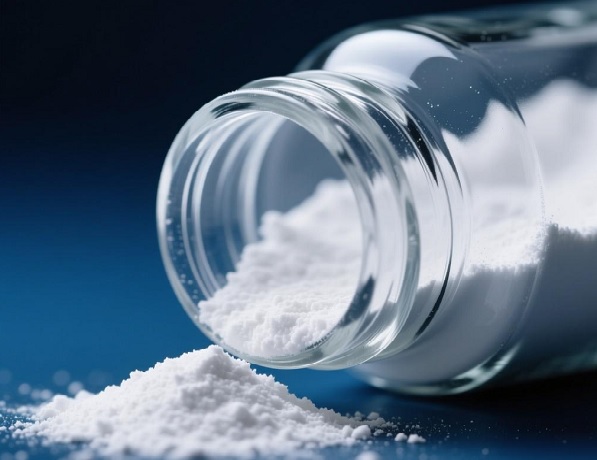
Polymer Processing Additives (PPA) are free-flowing white powders with a particle size ranging from 20 to 100 mesh. Added in extremely low quantities (50-1500 ppm), they significantly improve the processability of polymers and enhance the surface quality of finished products, without adversely affecting the inherent physical properties of the base material or subsequent processing stages. PPAs are widely used in various extrusion processes, including blown film, extrusion coating, cast film, wire & cable, pipe extrusion, sheet extrusion, fiber spinning, and blow molding, as well as in the manufacturing of color masterbatches. In addition to our traditional fluorine-based PPAs, we now offer fluorine-free alternatives to meet increasingly stringent environmental regulations.
Working Mechanism
Traditional Fluorine-Based PPA Upon heating and melting with the base resin (e.g., PE), the fluorine-based elastomer (the core component of PPA) exhibits poor compatibility with the matrix resin and exists as fine particles. Under shear force, these fluorine micro-particles migrate toward the melt surface. Due to the significant potential difference between the fluorine elastomer and metal, they adhere to and gradually spread over the metal surfaces of processing equipment (screws, barrels, dies), forming an extremely thin, smooth, and dynamic fluorine coating. The ultra-low surface energy of the fluorine elastomer alters the physical state at the melt-metal interface. The high-friction "stick-slip" motion between the melt and metal transforms into a low-friction "slip" motion. This drastically reduces the adhesive force and shear resistance between the melt and the equipment wall. Consequently, elastic deformation of the melt decreases, and recovery becomes smoother, significantly reducing melt rebound after exiting the die. This effectively mitigates melt fracture. Furthermore, by occupying the metal surface, this smooth fluorine coating prevents free radicals, residual catalysts, gels, and other potential nucleation sites in the melt from adhering to the metal surface, thereby reducing the likelihood of gel formation and die buildup.
Fluorine-Free PPA (NF5000 & NF7000 Series): - NF5000 Series: The primary component is a modified linear polyolefin. Its unique molecular arrangement ensures that the non-polar carbon chains consistently face the friction surface, while the polar hydroxyl groups easily bond with the equipment surface or the melt. This forms a flake-like lubrication layer inside the extruder, effectively reducing the coefficient of friction and contact resistance. - NF7000 Series: Composed of modified polysiloxane and synergists. The modified silicone possesses high surface activity, allowing it to form a uniform and dense lubricating film on metal surfaces. This reduces friction and wear between the metal and the melt, providing lubrication. Additionally, it adheres to the inner walls of machinery, preventing oxidation and corrosion, thus protecting the equipment.
Applications and Benefits
- Blown Film: Eliminates melt fracture, reduces die buildup, minimizes gels, improves surface gloss, lowers head pressure, and boosts output. |
 |
Directions for Use
The typical dosage of PPA ranges from 50 to 1500 ppm. It is recommended to use a twin-screw extruder with an L/D ratio greater than 42 (employing a screw configuration with weak shear and strong dispersion). First, compound the PPA into a masterbatch with a concentration of 2-5%, then add this masterbatch to the base material at a ratio of 0.5-1%. Some customers prefer to add the PPA powder directly into formulations containing high-loading inorganic fillers. For initial use, it is advisable to increase the dosage to shorten the activation time (typically 20-60 minutes). Once a stable state is achieved, the dosage can be reduced to the standard level. Equipment running PPAs continuously does not require a break-in period.Package and Storage :
Carton packaging with PE bag lining, 20KG/carton or 25KG/carton. Store in a cool, dry place away from light.Common Product Grades(Customization also available):
PPA201, PPA301, PPA301N, PPA302, PPA551, PPA551N, PPA553, PPA901, PPA901N
Fluorine-Free Series: NF5000, NF7000, etc.